

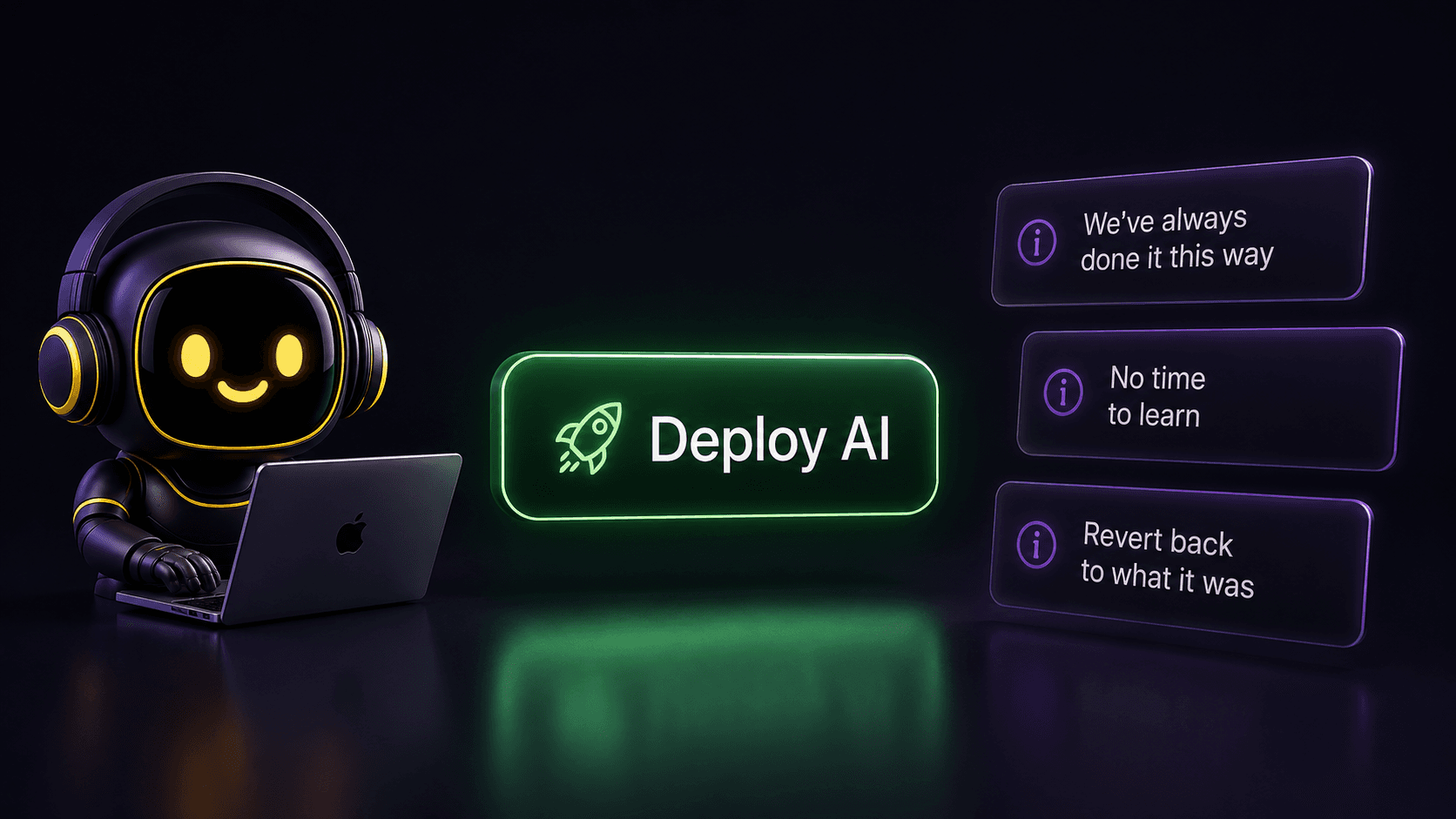
A company buys licenses, runs a demo, launches a pilot — the model performs exactly as promised. Six months later, it turns out only a handful of enthusiasts are actually using it, while everyone else has quietly gone back to the old way of working. The reason is rarely that the AI "isn't smart enough." Most often, it's how the rollout itself was handled.
The tool arrives before the workflow changes
The most common mistake: a team gets access to Copilot, ChatGPT, or an internal AI assistant, but the process around it stays exactly the same — the same approvals, the same sign-offs, the same handoff sequence. If code review, manager sign-off, or final approval stay unchanged, AI just adds one more step to the old process instead of replacing the slow part. Generation speed goes nowhere if the bottleneck was never in the generation.
No one specifically owns whether it's working
AI tools are often rolled out top-down — leadership makes the call, IT buys the license, and no one measures the outcome. IT tracks "how many people have access," but not "how many people are actually saving time." Without a specific person accountable for adoption in a specific team, usage quietly falling to zero goes unnoticed — until someone asks during a budget review why there's no visible ROI.
People don't trust output they can't verify
If an employee can't quickly check whether the AI missed something important — a lawyer isn't sure the contract summary caught every clause, an analyst doesn't trust the numbers in a generated spreadsheet — they do the work manually anyway, just in case. The result is that AI doesn't cut work, it adds to it: generate first, then verify by hand just as thoroughly as before. Trust only shows up once people have a fast, clear way to check the output, rather than having to take it on faith.
Fear of being replaced kills honest feedback
If the message from leadership sounds like "this tool will make you 30% more efficient," employees hear "so we'll need 30% fewer of you." In that atmosphere, people either downplay how well the tool works or deliberately avoid using it so they don't look replaceable. Adoption fails quietly — no one openly admits they're not using the AI, because admitting it means admitting the work they used to get paid for is now worth less.
Training is one demo, not a habit
A single kickoff session with a polished demo doesn't build the habit of reaching for a tool under deadline pressure. People default back to the familiar way of working because it doesn't require extra cognitive effort exactly when they're stressed. Companies where AI actually sticks embed concrete prompt examples into the team's real workflows and return to training more than once, instead of treating it as a one-time event.
The takeaway
The model itself is already a commodity — most modern AI tools technically do what they're advertised to do. What decides whether adoption succeeds or fails is the organizational design around the tool: whether the process actually changed, whether someone owns the outcome, whether people have a way to trust the output, and whether it's safe to admit something isn't working. Companies that get adoption right treat it as a process redesign with an owner and a metric, not as a license purchase